
By Nigel Rudyard (https://tachyonradio.com)
Introduction
Perhaps one of the most fascinating and under-represented fields of Ufology are cases that pre-date the invention of both photography and powered flight. Since the outset of the space age (1957(i)), the phenomenology of Unidentified Flying Objects has a correlation that is – understandably – directly proportionate with the number of aerial machines we human beings have put into the skies, particularly those that are capable of high velocities, altitudes, aerial endurance, or terrestrial orbit.
As someone who started out as a historical researcher, before turning to the sciences, I am fascinated by the precious shards of historical chronicle and references to unidentified aerial phenomena; after all, there is no ambiguity in seeing flying objects in the skies above centuries before the Wright Brothers achieved heavier-than-air flight in the Kill Devil Hills of North Carolina. The Roman Empire did not have an air force.
I make no claim to expertise with regard to the following stories from classical antiquity, nor is this an exhaustive list, just a few of my favourites. Nor do I claim to be an expert in this stuff – I’m more of an interested observer. My good friend of almost 50 years, Steve Yarwood, is an expert ufologist with an encyclopaedic knowledge of the great cases, curator of Ufological materials, and has contributed much to the systematic gathering of data from actual witnesses to UFO incidents and other methodological approaches. I have no such credentials. One thing Steve often says is that ‘minds are like parachutes: they work best when they are open.’ My own reading of that wisdom is that it, perhaps, doesn’t matter so much about the veracity of particular incidents or phenomenon we discuss, but what does matter is that you think for yourself when you consider the evidence (or lack thereof).
In that spirit, let us begin shedding the fragile light of early history of mysterious lights in the sky, long before Roswell, Foo Fighters, Blue Book or Project Condign ever appeared on our cultural radar. Please also note that the precise dates of some of these incidents vary. Many of them pre-date the Julian calendar. I will present the narrative, analysis, and sources for further study for each incident.
1: The Fiery Disks of Ancient Egypt
Date: c.1440 BC
Location: Lower Egypt (the Nile Delta of northernmost Egypt)
Source: Tulli Papyrus (disputed transcription)
Incident:
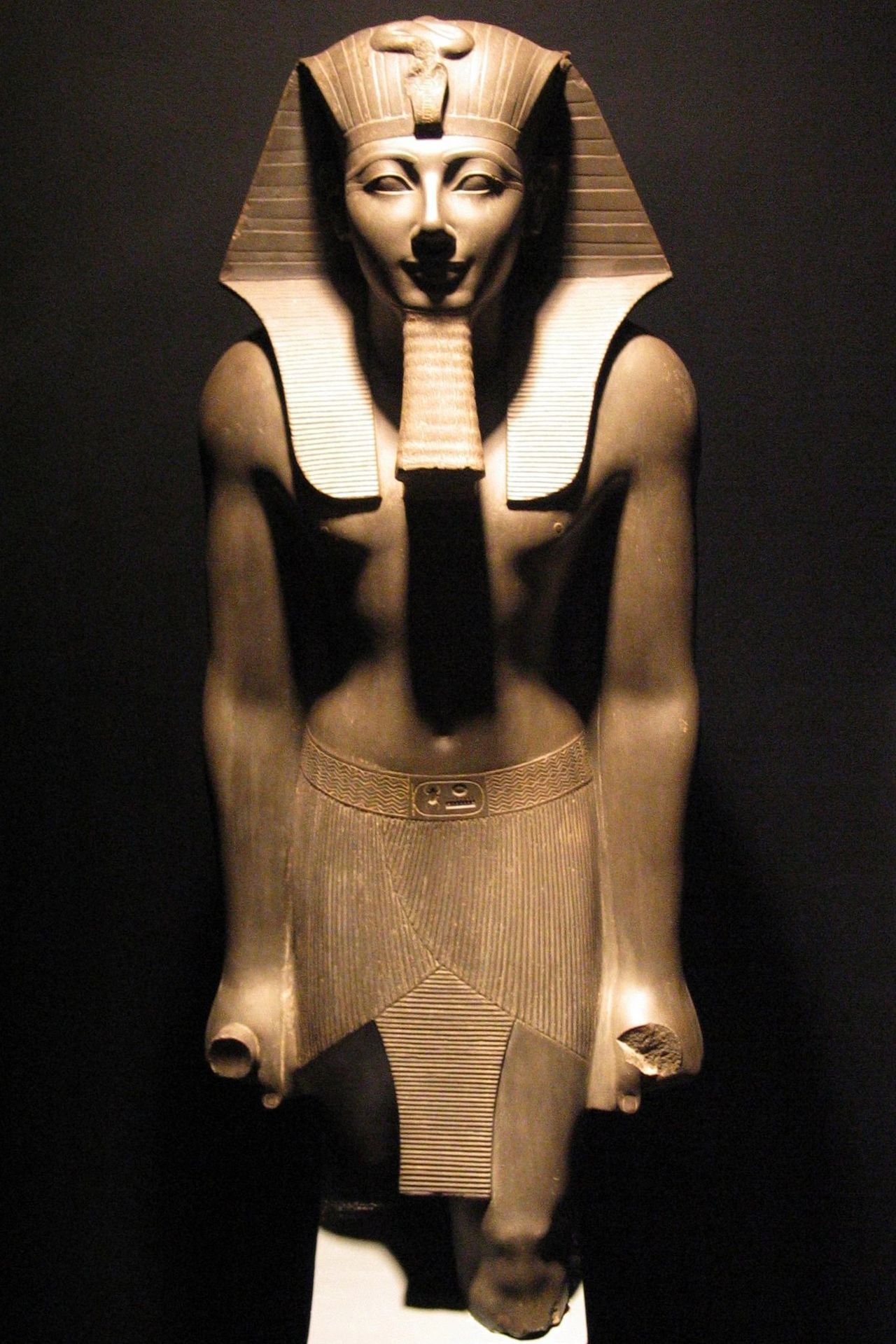
Pharoah Thutmose III’s scribes purportedly reported that ‘fiery disks’ were observed in the skies above Lower Egypt in the year reported. These objects are additionally described as ‘circles of fire’.
Analysis: The disputed Tulli Papyrus is claimed to be a transcription of an original Egyptian papyrus dating back to the reign of Pharaoh Thutmose III – AKA Thutmose the Great, or Thothmes, who ruled Egypt from 1479 BC to 1425 BC. In 1953, Tiffany Thayer wrote an article in Doubt, the Fortean Society Magazine that he was sent the transcription by celebrated Egyptologist, Boris de Rachewiltz, who had found the original transcription of the papyrus amongst papers of the late Alberto Tulli, director of the Vatican Museum. Ufologists Jacques Vallee and Chris Aubeck later concluded the transcription to be either a hoax, or erroneous, as Tulli had supposedly copied it during a single viewing of the original papyrus using an “Ancient Egyptian shorthand”, and de Rachewiltz had never seen the original, the alleged text likely contained transcription errors, making it impossible to verify.
Further reading: Vallee, Jacques; Aubek, Chris (2010). Wonders in the Sky: Unexplained Aerial Objects from Antiquity to Modern Times. Penguin. ISBN 9781101444726.
2: Livy’s Phantom Ships in the Sky, and other stories
Date: c.218BC
Location: Roman Republic
Source: In his authoritative works on the history of Rome, the great Roman historian, Titus Livius, notes the curious incidents, or portents of winter 218BC.
Incident:
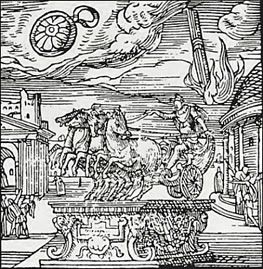
In the winter of 218BC, Livy notes in Book 21 of his Ab urbe condita libri, that…..62. “In Rome or near it many prodigies occurred that winter that [IV] phantom ships had been seen gleaming in the sky; that the temple of Hope, in the provision market, had been struck by lightning, [and also] that in the district of Amiternum, in many places, apparitions of men in shining raiment had appeared in the distance, but had not drawn near to anyone….”
Analysis: Anybody who has read transcripts of Livy’s books will note that these are brief chronicles, usually based on third hand reports, and are not followed up nor offer any further evidence beyond the short observations related to the author. They are also redolent of what later theologians would call ‘miracle stories’, relating to religious shrines and deities etc. However, there were other sightings of mysterious objects in the Roman skies – as the major global power, the Empire charted its own history in great depth – including unusual events.
We are indebted to planetary scientist Dr. Richard Stothers, who surveyed early UFO incidents of classical antiquity, and noted that Livy’s mysterious ‘spectacle of ships that gleamed in the sky’ had been analysed thusly: “Franklin Krauss, for lack of an alternative explanation, speculated that the “ships” were clouds or mirages, although suggestive cloud formations had been long understood, familiar features.” Stothers also noted two other reports, made around the same time, noting that reports “were made under the considerable pressure of the Second Punic War, when prodigies were most likely
sought more frequently and carefully than usual.”
The other two incidents occurred in 217 BC: “at Arpi round shields (parmas) were seen in the sky” [“… et Arpis Parmas in coelo visas pugnantemque cum luna solem …”] A parma was a small round shield made partly or wholly of iron, bronze or another metal. Livy went onto say that observers saw the ‘sun battle with the moon.’
Stothers also relates an earlier report that in 212 BC ‘“at Reate a huge stone (saxum) was seen flying about”…. The implication would seem to be that the object in question was a stony gray color.’
Stothers’ excellent study is a must-read for those interested in the UFOs of classical antiquity. He also chronicles various other Roman sightings made by Livy and his disciples (e.g. Pliny, Plutarch, Orosius), such as in 173 BC “at Lanuvium a spectacle of a great fleet was said to have been seen in the sky.”
Further reading: Livy: “The History of Rome, Book 21, Chapter 62″. (Ab Urbe Condita Libri); Stothers, Richard (November 2007). “Unidentified Flying Objects in Classical Antiquity” (PDF). The Classical Journal. The Classical Association of the Middle West and South, Inc. (CAMWS). 103 (1) [Note: Stothers was an astronomer and planetary scientist at The Goddard Institute.]
3. Josephus’ Sky Armies of Judea
Date: AD65
Location: Judea (i.e. modern Israel and Palestine)
Source: Josephus (Flavius Josephus, Jewish-Roman historian)
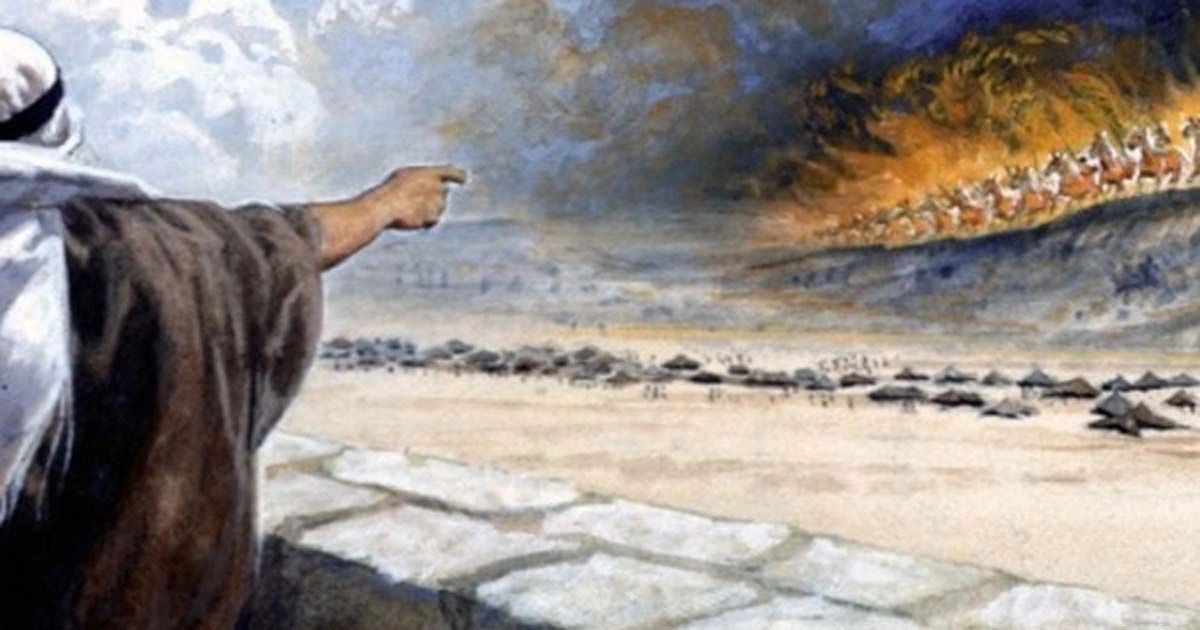
Incident: Historically, the most famous “sky army” of chariots hurtling through the clouds appeared in the spring of ca. AD 65 over Judea. The historian Josephus reported: “On the 21st of the month Artemisium, there appeared a miraculous phenomenon, passing belief. Indeed, what I am about to relate would, I imagine, have been deemed a fable, were it not for the narratives of eyewitnesses and the subsequent calamities which deserved to be so signalized. For, before sunset throughout all parts of the country, chariots were seen in the air and armed battalions hurtling through the clouds and encompassing the cities.”
Analysis: Josephus was a fascinating character. A Jewish revolutionary who fought the Romans, and as a general in the first Jewish Roman war surrendered to [later Emperor] Vespasian in AD67, who made him a slave, then later granted Josephus’ freedom, and use of the family name, Flavius. It has been noted that Josephus may have viewed this phenomenon himself and apparently did research on it, he appeals to eyewitness accounts to bolster his credibility. The phenomenon does not seem to have been an aurora, cloud patterns or meteors, but does resemble the “aerial fighting” of modern UFOs.
Further reading: Strange History 28th Feb 2011: “Josephus’ Armies in the Sky”.
4. Cassius Dio and Angel Hair over Rome
Date: AD196
Location: Rome
Source: The Greco-Roman historian Cassius Dio
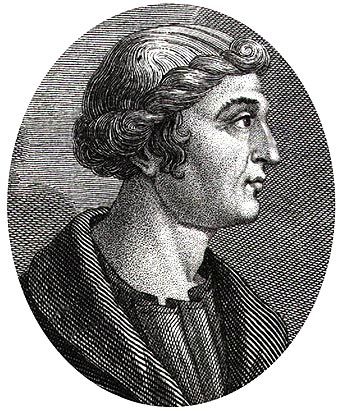
Incident: Cassius was a noted Roman historian and statesman who penned over 80 volumes of Roman history – in the year of 196 AD he records that he found “A fine rain resembling silver descended from a clear sky upon the Forum of Augustus. I did not, it is true, see it as it was falling, but noticed it after it had fallen, and by means of it I plated some bronze coins with silver; they retained the same appearance for three days, but by the fourth day all the
substance rubbed on them had disappeared.”
Analysis: Angel hair (or siliceous cotton) is a folkloric sticky, fibrous substance reported in connection with UFO sightings, or manifestations of the Virgin Mary. It has been described as being like a cobweb or a jelly. Cassius purportedly used some of the material to plate some of his bronze coins, but by the fourth day afterwards, the silvery coating was gone.
Our friend Dr Richard Stothers again, notes: “In Hynek’s system, a Close Encounter of the Second Kind leaves a physical trace. Ancient literature contains no record of a UFO-like object pressing an imprint into the ground or depositing a material residue. On the other hand, rains of strange material were occasionally reported, and since analogous reports in modern UFO research are accepted when sufficiently well-documented and verified, ancient
examples are cited here in the absence of more direct evidence. In modern reports, a whitish gossamer substance dubbed “angel hair” is said on rare occasions to have dropped from a UFO and sometimes to have vanished quickly on contact with the ground. In other
reports, glassy fibers are left by a UFO after takeoff from the ground, or a chalky substance remains.”
Further reading: https://listverse.com/2018/03/04/10-ufo-sightings-from-very-early-history/
5. Air ship of Clonmacnoise
Date: AD 740
Location: Teltown, County Meath, Ireland.
Source: Several sets of Irish annals, those of Ulster, Tigernach, Clonmacnoise, and the Four Masters, all have entries relating the Airship incidents, with variants.
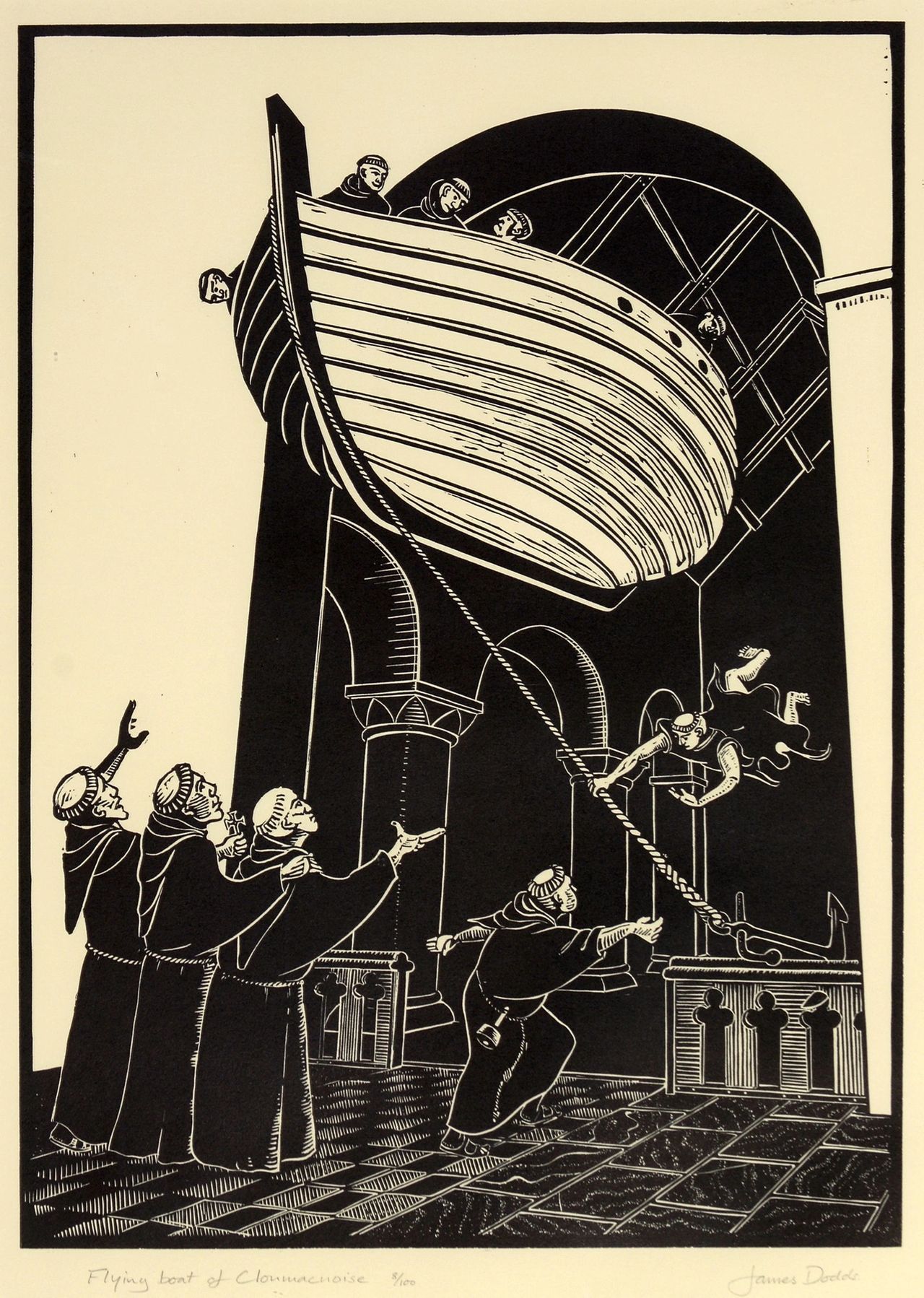
Incident: The air ship of Clonmacnoise is a narrative repeatedly stated in numerous medieval sources. The original report, in the Irish annals, simply mentioned an apparition of ships with their crews in the sky over Ireland in the 740s, later accounts through the Middle Ages progressively expanded on this with picturesque details. First the ships were reduced to one ship over Teltown from which a crewman threw and then recovered a fishing-spear. Then the scene shifted to the abbey of Clonmacnoise, and later to Britain, and the fishing-spear was changed to an anchor which snagged on some feature of a church. The ‘sailor’ who climbed down to release it was also said to be in danger of drowning in the thicker air of this lower world.
Analysis: The story was retold by Seamus Heaney in a well-known poem collected in his 1991 volume, Seeing Things. The details with which the original story in the annals were progressively embellished appealed to the medieval, and especially medieval Irish, love of miracles, marvels, and inversions of reality. Flying ships or boats, emblematic of the Church, sailing towards heaven are a motif found on several medieval Irish carved crosses, some dating from as early as the 8th century. The trope of fouling and recovering an anchor in a monastery occurs also in a story referenced in a gloss on an early Irish hymn, “Ní car Brigit buadach bith”. The archaeologist Heather King possited that Clonmacnoise may well have been the first city built in Ireland.
Further reading: Jeffrey Jerome Cohen: The Sea Above (2015). In Cohen, Jeffrey Jerome; Duckert, Lowell (eds.). Elemental Ecocriticism: Thinking with Earth, Air, Water, and Fire. Minneapolis: University of Minnesota Press. p. 108. ISBN 978-1452945675.
6. Conclusion: Beyond Antiquity
These early incidents and stories from classical antiquity and the dark ages are where history meets chronicle and myth, mystery and miracles. As such, there is generally little scientific basis to these sightings and reports. Undoubtedly, throughout history, where people have seen unusual aerial phenomena, many of these have later been shown to be comets (e.g. Halley’s Comet, recorded by Chinese astronomers as far back as 467BC), bright meteors, one or more of the five planets that can be readily seen with the naked eye (particularly Venus), planetary conjunctions, and atmospheric optical phenomena (e.g. lenticular clouds). However, there is no doubt that the objects reported in antiquity often match modern UFO descriptions as related by pilots, military personnel and other reliable witnesses – Livy’s ‘parma’ shield-shaped objects are consistent with what we would come to term ‘flying saucers’, and sightings at times of war and international strife are again consistent with incidents relating to World War II and its immediate aftermath. Any advanced intelligence studying humanity would perhaps be fascinated (and horrified), by man’s inhumanity to man, at any point in our history.
There are many more stories from the ancient world, but that’s for another time. There was something of a revival of sightings in the middle ages – for example the celestial phenomena over Nuremberg and Basel of 1561 and 1566 respectively. And these were recorded as woodcuts, and recorded in early news pamphlets.
Despite the discreditation of Erich Von Daniken and the ancient astronaut hypotheses, etc., there is no doubt that through the ages, strange phenomena have been encountered. There is little doubt that those living in pre-history (i.e. before the written word) would also have observed unusual events in our skies. To me, the obvious difference is that these ancient incidents are related without the obvious censorship, investigation, or overt intercession of ruling governments. Sophisticated stewardship and control of the written word would come later. It must also have been easier to see anomalous aerial phenomena in a world without modern urban lighting, aircraft and International Space Stations above one’s head.
“The past is a foreign country: they do things differently there,” wrote L.P. Hartley in his 1953 novel “The Go-Between.” Perhaps not quite as differently as we might have thought.
Notes: (i) It is commonly acknowledged that the space age began on 4th October 1957, with the Soviet Union’s successful launch of the Sputnik satellite, which completed over 1,400 orbits of the Earth in its brief operational life.