
By Natalie Pearce
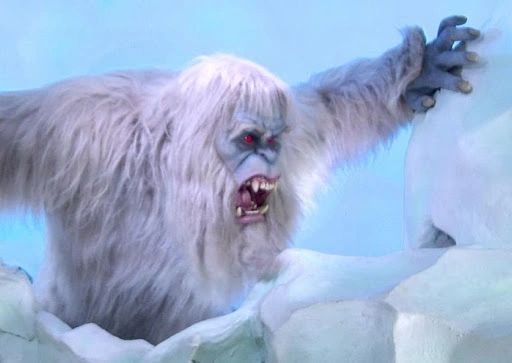
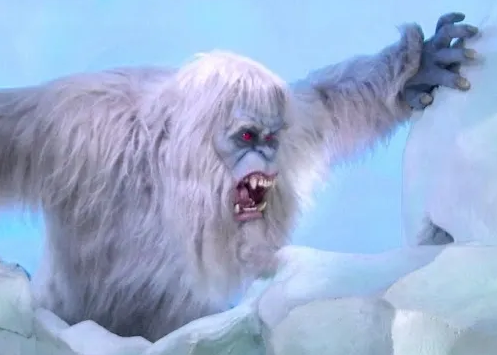
The Yeti is a famous cryptid known by most of us. You can see him in cartoons, movies and he is even available as a cute cuddly toy.
If you go back and look at Buddhist mythology, the Yeti is a peaceful creature. Its name was derived from the word “Yeh-Tah” which translates as ‘rock thing’. Stories tell of the Yeti living in caves on snow topped land or on glaciers. Even before the Yeti was mentioned by Buddhists, there are records of a ‘Glacier Giant’ roaming the planet by Tibetan and Nepalese people.
The Yeti reportedly stands anywhere from 8-12 feet tall, with a full coat of fur and looks very much like an upright walking ape. The Yeti is depicted as being white, however this is thought to be incorrect, with witnesses saying it has a brown/red coat of fur.
Sightings
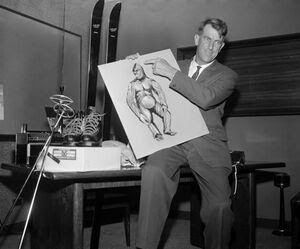
In 1953, Sir Edmund Hillary set out as the first person to officially hunt the Yeti.
He was fascinated by the stories of the ‘abominable snowman’ and reports of large foot prints found in the snow. During his expedition with George Lowe, they found unusual hair samples along a mountain pass. They discovered tracks which they believed to be Yeti in the Barun Khola region. The following year, two other members of his team again found tracks in the Choyang Valley.
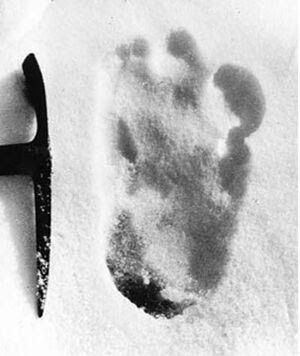
Some people believe this to the foot print of a Tree Bear, but Hillary was sure he had captured evidence of the allusive Yeti.
It was 1899 that we first saw documented evidence of the Yeti. In the book ‘Among the Himalayas’ by Laurence Waddell, he references footprints left in the snow by a large upright creature. Sceptical that it was out of the ordinary, he concluded the tracks to be made by a bear, despite locals telling him about the Yeti legend.
Encounters
In 1925 whilst on an expedition, a Greek photographer details how he sighted a Yeti 15,000 foot up a mountain stating “Unquestionably, the figure in outline was exactly like a human being, walking upright and stopping occasionally to uproot or pull at some dwarf rhododendron bushes. It showed up dark against the snow and, as far as I could make out, wore no clothes.”
He noted approximately 15 footprints left in the snow on his decent down that were 24 inches apart stating they were similar to human prints but 6-7 inches long by 4 inches wide. There were 5 distinct toes and a perfectly clear instep.
As I have mentioned in previous articles, we couldn’t mention the Yeti without revisiting the Dyatlov Pass. This is a famous case of a group of hikers who went missing. The mystery surrounding their disappearance grew around the fact their tent was found crumpled up in the snow with gashes down the sides. 5 bodies were recovered near the tent but the other bodies were not found until over 3 months later. These were located under 10ft of snow in a ravine quite some way from their co-climbers.
The equipment was all found in their tents. They were dressed in each other’s clothes and some just in their underpants. It appeared that they had been in the snow in bare feet. The bodies showed high levels of radiation and one of the bodies had had its tongue removed. Autopsy results showed the forces that had killed the climbers was huge, similar to that of a bad car crash. Autopsy reports simply recorded the case of death as “compelling unknown force”. Some believe this was a Yeti attack.
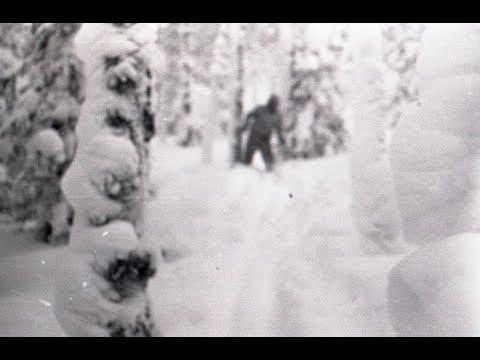
This image was found on the camera of one of the explorers that lost their lives
In 2012, there were reports made of a Yeti family sighting in the Myski Village in Siberia. Fishermen spotted what they thought were bears. Getting closer and now believing the group were actually humans; they shouted over and asked if they needed help. The creatures just ran away back into the woods leaving the fisherman perplexed with what they had seen. They were clear that what they had observed stood on two legs and ran on two legs, as if it were human. The same group of creatures were spotted again a few weeks later in the same area.
In 2016, a group of travellers were driving in a snow storm close to Mt Bolshoy. Out of nowhere a large creature, on two legs crossed quickly in front of the car.
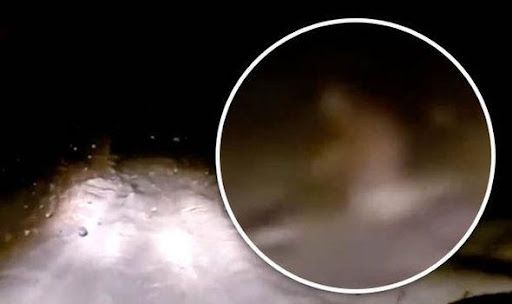
This sighting was dismissed as being a “wild animal poacher evading the police” by local investigators. Others said the passengers in the car were simply “hallucinating”.
In 1958, villagers in Tharbaleh, Tibet came upon a Yeti that had drowned. They described the body of that of a small man with a pointed head covered in red/brown fur. There are many tribes in Tibet that hold the Yeti as a sacred being and also claim to have parts of their bodies, which they keep very protected.
During the 1980’s, British Mountaineer Anthony B Wooldridge was climbing a solo expedition through the Himalayas. He began to notice foot prints in the snow that resembled those taken by Eric Shipman in 1951. Moving forward he observed signs of a recent avalanche with a furrow towards the end. He noted more tracks around this space. It was then when he was about 150 meters away he saw what he believed was a Yeti. It was in the furrow space itself.
It stood around 6ft and had a large build. It was upright looking down at the snow with its legs apart. He noted it covered in hair and said that “it was no bear, monkey or ordinary human”
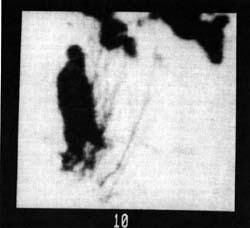
He observed the creature for just under an hour until the weather began to change for the worse and he had to leave, remaining convinced he had just seen a real life Yeti.
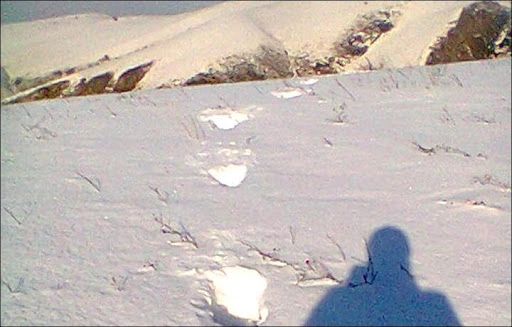
Even President Putin of Russia believes in the Yeti and claims that he had a visit from three even capturing its snowy footprints. He reportedly spotted them from a helicopter above a remote Russian National Park. He describes them as being a family with a male, female and infant.
Scientific Evidence
Sadly we have little in the way of evidence to support the Yeti existence. In 2014, a paper was published that analysed the hair samples from supposed Yeti sightings. DNA showed that fur was that of a brown bear/polar bear hybrid.
What was also interesting was the research also showed that the Himalayan brown bears came from a lineage of brown bears that were isolated from other brown bear populations. Many living in the Tibetan Plateau area. Could it be that these are in fact the Yeti’s spoken of?
According to polls, around 30% of us believe in the existence of the Yeti. The existence of such stories about them over the centuries could be seen as evidence enough. Yes, tales have been told and passed down through generations but can we really dismiss all the photos of images of the creature and or their foot prints? The Yeti remains a mystery that isn’t going to be solved any time soon.