By Natalie Pearce
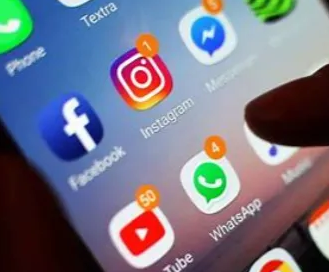
In 2023 we live a life surrounded by social media. From Twitter to Facebook to Tik Tok and all the other platforms that have burst in and out of the scene. We are immersed daily in these apps, often for hours on end allowing us to gather and share information at a pace never seen before.
This social sharing is booming, so what does it mean for the ufology world and what impact has it had on how we as a community engage? Even when we look at research published in 2015, back then we spent 22% of our online time engaged in social media platforms. In 2023, there will be 4.7 billion social media users across the globe and our daily usage is now at an all-time high.
Nick Pope, previously of the MoD said “the rise of the internet and social media fundamentally changed ufology. It gave a voice to everyone. But in this field, that means some fairly colourful characters.”
I agree with Pope’s statement around this. As a UFO and paranormal researcher, I use social media a lot for information gathering, to connect with others and to share ideas and encounters. My experiences have taught me a number of things – the most important of which is the sheer amount of mistruths spread world wide using social media. Ufology has long since been dominated by the same so-called ‘experts’ who recycle the same old narrative about the same old stories within the field. As our use of social media has evolved, we now have more and more people giving their opinions and so called ‘facts’ around the tales of all things UFO and paranormal related. On one hand this does provide everyone with a voice, but the flip side is that it has caused a lot of hate and shaming out there for the whole world to see and engage with. If you dare to voice your opinion on social media, there may be those out there that will agree with you, but there will almost certainly be those who disagree and feel that they then have the right to ridicule your beliefs. It really is a catch 22 situation, but one thing for sure, those of us who are out there sharing our thoughts on social platforms need to develop a thick skin quickly and also a finely tuned BS detector!

Our community was always labelled with being full of odd balls, conspiracy theorists and general tin foil hat donning folk, but now even within our own ranks we have turned on each other, thanks in a big part to social media and how it has enabled easy lines of communication. One click sends your post out there for millions to see in milliseconds.
A simple entry into Google with the question ‘Do aliens exist’ brings me 232,000,000 answers to that one question in a blink of an eye. It links me to several social media platforms immediately. Here my mind is subjected to a wide range of people’s perspectives on that open ended question – some from individuals and some from establishments we would think would be telling us the truth for sure, after all they are household names? Articles from NASA, BBC, University of Oxford to name a few draw me in. The fact remains that on social media you can just about say and do anything. Even when what you say is false, misleading or down right mean. Trustworthiness and reliability down hold much credence it seems when it comes to sharing information.
People’s beliefs in high strangeness and the associated forums this encompasses is certainly on the rise, yet there is little in the way of research into how media, particularly social media has impacted this growth in interest. If we take the recent so-called spy balloon incidents as an example, when the US military shot down four unknown items from the sky. What followed in January and February of 2023 was a huge social media storm of speculation, disinformation, conjecture and debate. Were these objects not from Earth? Simple sky lanterns? Weather balloons? Or spy balloons? Platforms were full of a wide variety of stories ranging from the plausible to the downright insane with many iterations in between. Depending on what platform you were looking at and who’s stream on that platform you were tuned into meant the difference to thinking aliens had come to visit or believing in cutting edge espionage from foreign nations. So, who was telling us the truth? The simple answer is we don’t know. There are so many voices out there giving their opinions that sometimes its hard to cut through the noise and make up your own mind on the matter. Stories and pictures get so manipulated that the truth which must be in there someplace is so distorted that we never get to the bottom of things.
Now let’s discuss the term ‘influencers’. This term is now something you can even put down as your occupation of choice. Put simply, social media influencers are people with a large group of followers on platforms who can, by way of their purported expertise in a certain area, affect the decisions of others. They are people who are used to push messages out there into cyberspace and are often paid to do so, usually by companies or establishments that will benefit from their far-reaching audience numbers and popularity.
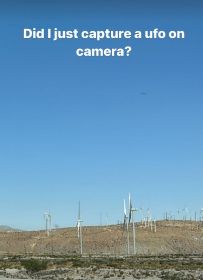
This also includes celebrities who use social media for its mammoth marketing opportunities or simply to create a presence in cyberspace to demonstrate their dominance from peers. A number of celebrities use their social media to discuss topics relating to Ufology. Singer Demi Lovato waded into the debate on the existence of aliens a few years ago detailing experiences she had witnessed during her life. Even very recently she uploaded a photo showing a possible UFO she had captured on camera.
You can’t escape the impact that the famous Kardashian family has had on the world. Khloe Kardashian tweeted in 2015 about strange lights she had witnessed in the sky. Even though the US Navy gave a narrative about the lights being pre planned missile testing, Khloe remained steadfast in her opinion that what she had witnessed was not from Earth.
The pop star Nick Jonas spoke out about an encounter he had stating…
“I was in my backyard in L.A., and I looked up at the sky and [saw] three flying saucers, I looked at my friend and said, ‘Are you seeing this or am I losing my mind?”

Oddly enough this was another celebrity encounter that the US Navy claimed responsibility publicly for stating that the lights were simply a trident missile test. Funny how such rebuffed statements are rarely made when joe public make similar statements. You find many influencers and celebrities that say they have experiences with UFO’s or believe in the existence of ET beings. We can’t underestimate the power that people like this have via their social media to change opinions and manipulate truths out there with the rest of us who are their audience. But is this the reason that more people are starting to believe?
So, what about social media being used for misinformation or disinformation. Well, there is a difference between both but these strategies to fool us have been around within our communities for a long time. Spotting misinformation was hard before, but now so much information is out there it’s even more complex to spot. Misinformation is taking some truths and mixing them up and blending them into a new narrative so the reader gets a tarnished view of the original truth. Psychologists have even defined the “misinformation effect” as a phenomenon in which someone’s memory of something is retroactively altered by misleading information learned after the fact. Disinformation is basically false information purposely put out there to deceive others. Social media allows both types of narrative to be widely spread and widely believed.
So what does the growing social media trend hold for us?
Well, it’s not going away.
Yes, there is a huge amount of positive things that come from bringing the world together to share and debate matters, but we need to be mindful that some people within this field have had massive psychological trauma experiencing and working within paranormal and UFO fields. We need to be kind and respectful to all.
We also have to treat what we read with our eyes wide open. Not everything that is put out there on social media platforms is true nor is it always evidenced based. It may have been in fact put out there purposely to give misleading information. Used sensibly with a clear head, social media can lead the way in many avenues, but remember as was so famously said in the X Files, ‘The truth is out there’.. you just have to sift through a mountain of social media information to find it.