
By Natalie Pearce

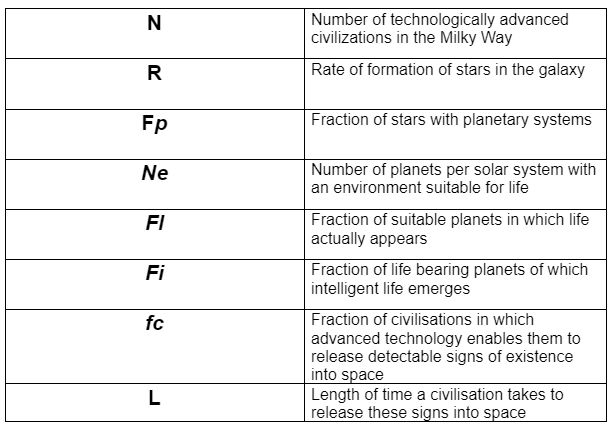
For most of us, even the most basic of equations can make your mind ache. Above is the Drake Equation. A bunch of letters that don’t really mean much? Wrong. This special equation, formulated by Dr Frank Drake in 1961, is an estimation of the number of active, communicative extra-terrestrial civilizations in our Milky Way. It calculates an approximation rather than a specific number.
So, how do we actually discover new planets out there?
Well usually it is with one of two methods. The first is when astronomers watch a planet transit across a star. Basically, this movement causes a dimming effect that is visible to astronomers and can then be measured and recorded. The second is by watching a new ‘planet’ and how it moves in essence around its parent star. A technique is now in play called “verification by multiplicity” where we can even identify systems with multiple planets in them.
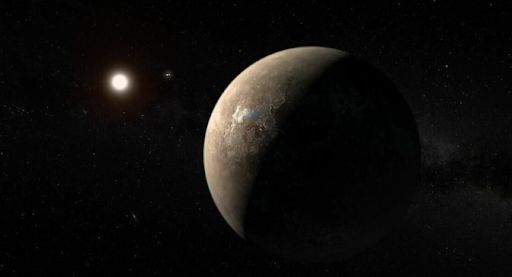
The bigger the planet is, the easier it is for us to detect and research. However, research from the Kepler Telescope has shown that smaller, rocky plants are more common than we first thought. The latest experts tell us that 53 planets have now been identified as being suitable for potential life, 13 of which are “likely to be habitable” according to the project Planetary habitability Lab at the University of Puerto Rico. That statement is huge and awe-inspiring although to us in ufology, something we have known for some time now.
So, to try and make the equation a little simpler to understand, lets break it down. Remember each of the dots in the equation denotes multiplication. Firstly, and importantly, some of the terms are very speculative and mean that we will never obtain a definitive answer. If you can accept that, you are halfway there.
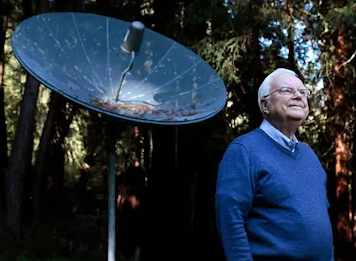
Dr Frank Drake sadly died in late 2022. He had roles working within the Jet Propulsion Lab, SETI (Search for Extraterrestrial Intelligence) Institute, National Radio Astronomy Observatory and Cornell University during his long and distinguished career as a Radio Astronomer.
Let’s begin where Drake did in 1961.
Dr Drake hypothesised that 10 new stars per galaxy are born each year. He believed half of these new stars will have planets that orbit them, of which 2 would likely be habitable planets. He then speculated that 100% of these planets classed as habitable would develop life, 1% of which would be intelligent life. He went on to state that each intelligent civilisation would maintain its ability to communicate for around 10,000 years. Once you crunch these figures into his equation, you come out with the number 10. That is 10 planets with intelligent life within the Milky Way.

All those years ago, the only part of the equation that could confidently be measured was R* – the rate of yearly star formation in the galaxy. When we look at the part of the equation that estimates planets that might support stars (ne) we can now say there may be up to 11 billion Earth sized planets orbiting Sun like stars based on the Kepler Space Mission data of 2013 but even this is just a guesstimate.
The equation has not been without its critics. The main contention is the estimated values which of course by nature cause an uncertain answer. Many have argued that its values are so uncertain that the use of the equation can simply not be relied upon.
John Getz, former chairman of SETI, stated, “The Drake equation was an extraordinarily useful heuristic at the outset of the modern search for extra-terrestrial intelligence in the early 1960s,” he said. “It guided our first-draft thoughts on the subject. Sixty years on, however, it is a creaky and aging edifice that should be swept away in favour of fresh new thinking.” That said, many scientists still feel its credible. Jill Tarter of SETI announced the equation as “a wonderful way to organize our ignorance.”
One widely debated section of the equation relates to the length of time a habitable planet with intelligent life would have the ability to communicate into space and cited this at 10,000 years. To me this is the most open-ended part of the puzzle. How can we even begin to estimate this? Could we not hypothesise that if a civilization was that advanced, communication would last for an indefinite period of time? And are we concluding that all advanced races are organic? We don’t know how, if any artificial intelligences may have replaced their organic ancestors.
David Grinspoon, an American Astrobiologist, states that in this instance the Milky Way would have been gradually accumulating advanced civilizations since its birth. He goes on to state that any advanced race discovering another would learn from one another and therefore continue to develop and advance. In stark contrast to indefinite years, Michael Shermer, a science historian and executive director of The Skeptics Society, states the value to be around 420 years based on calculations of civilisations since the Roman Empire. None of these civilizations had the ability to communicate via space so perhaps its not the most reliable of guesses.
Adam Frank and Woodruff Sullivan modified the Drake equation in 2016 and over the years many others have put forward suggestions and ideas for changes. An example of this was the proposal by Astronomer Sara Seagar who proposed the inclusion of searching for planets with biosignature gasses produced by living organisms. So advanced is our technology today that remote space telescopes can pick this up.
Innovations in telescopes will surely give us a better glimpse into what is out there. We must remind ourselves the Drake Equation was not and is not intended to be specific in solving the exact number of planets with intelligent life, it’s simply a formula for considering the concept of life outside of planet Earth and its likelihood of existence. Its concept led to the development of the subject of ‘astrobiology’ which can only be viewed as a positive development within the scientific community.
So, if we ask as Drake did back in 1951, is there life on other planets? Well yes, it probably does. Somewhere. We know that life adapts to its environmental conditions from the Theory of Evolution. If our environment is more than our planet, then you could say life has probably adapted to that wide open space beyond Earth. We also know that life here on Earth started from very difficult conditions. We have survived and adapted to ice ages, plagues, drought and pandemics so why wouldn’t another intelligent civilization do the same? We know for a fact that Earth-like planets exist out there which adds credence that intelligent life too would follow. We know oceans and lakes exist on other planets and we know at some point there was water on Mars and Titan, one of Saturn’s moons. We know water sustains life so probably, there are other places like Earth.
Many humans claim to have seen and even been contacted by extraterestrial visitors. We have the evidence to support this. So combining our contact experiences and the Drake Equation, we can say with some degree of certainty that somewhere out there, intelligent life exists.